You are what you legislate

Wednesday, June 25, 2014

Field Trip: Chefchaouen


This week I visited the town of Chefchaouen, about two hours south of Tangier, Morocco. Once we got out of the large urban center, the landscape turned into mountainous farm country. Both sides of the road were dotted with small farms, most characterized by a one-family home situated on a plot of land with some crops and some grazing animals.


Crops
I saw four predominant crops: olives, hay, corn, and onions. The olive orchards were extensive, stretching across wide hillsides. Hay – some type of wheat-like grass, I wasn’t sure exactly what it was – was grown on most of the farms, in relatively small fields. Corn, too, was grown in relatively small fields on some farms, not in the type of endless expanse we see in the Midwest. Similarly, onions were being grown on small-scale farms, some in plots as small as 20x30 feet. Other crops that I did not see growing in fields but were particularly prominent in local markets were cherries, small plums, and figs.
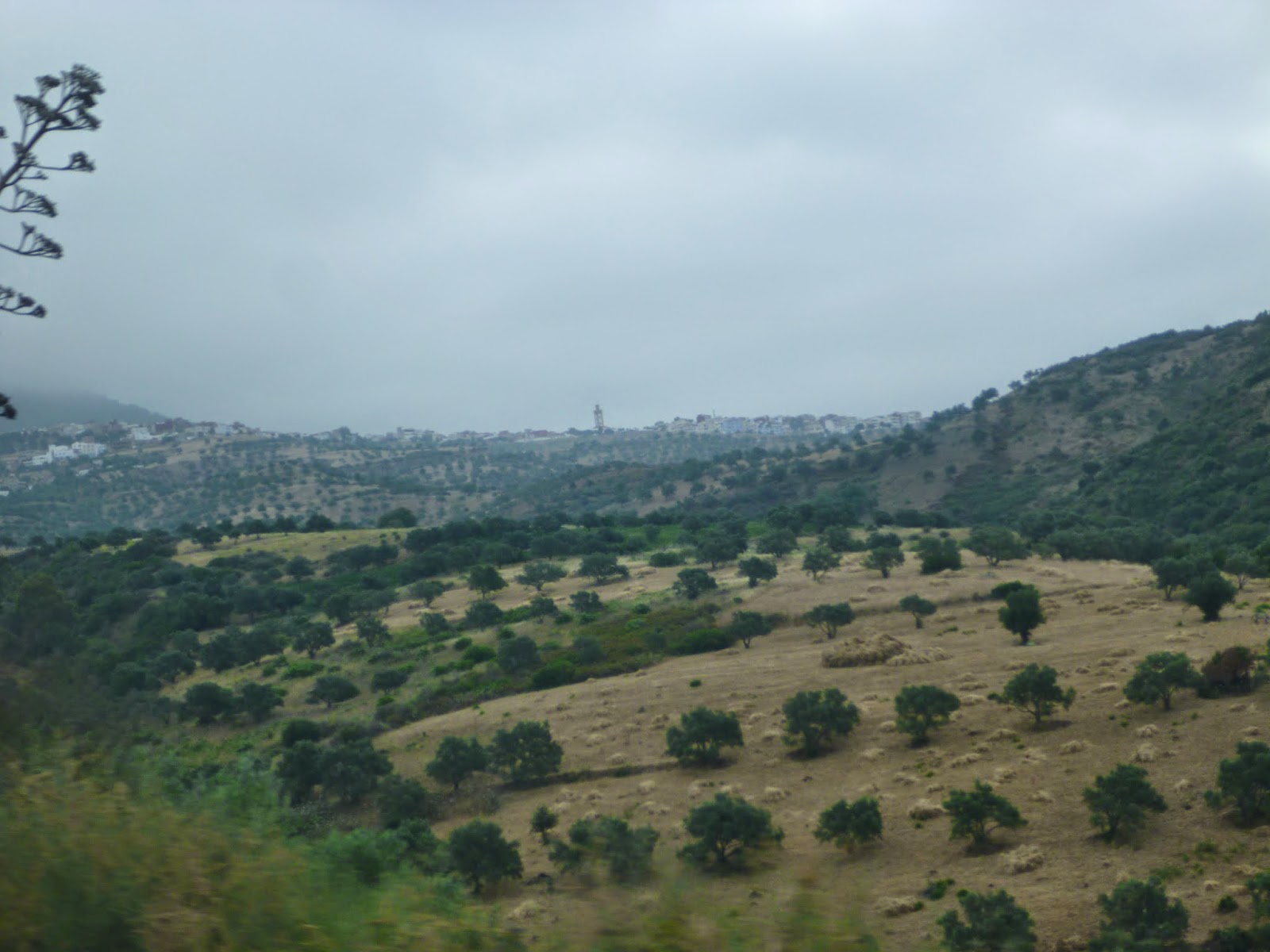

I saw a lot of hay being harvested during the drives to and from Chefchaouen, and my friend explained why: in November, there is a festival called Eid Al-Kabir in which nearly every household slaughters a ram. With just four months to go, everyone is trying to fatten up their sheep as much as possible, thus the need for lots of hay.


Animals for Food and Transport
Animals are an important part of agriculture in Morocco, and most farms I saw had both crops and livestock. I saw sheep, cows, and goats grazing on hillsides and in farm fields alongside crops. Some farms had a herd of just one type of animal, but many had a mixture: one or two cows and small herds of sheep and goats. Many farms had chickens roaming freely as well. All four types of meat are popular in Morocco, especially beef and chicken. Cows are important for milk production, as are chickens for eggs; sheep hides are used for decoration and warmth in homes.


Much of the meat eaten in this area is raised and slaughtered locally. On the way back to Tangier, were stopped at a restaurant in a small town for lunch. There was a butcher shop connected to it, and a young man was in the process of delivering a dozen whole ram carcasses. He wore a white smock and carried them in two by two, slung over his shoulder, while my companions ate roasted mutton and grilled ground beef. I asked the butcher if the sheep were coming from this area. He said yes, from the mountains, and pointed to the slopes visible out the front door of the restaurant.


Animals are not just raised for meat. Nearly every farm I saw had a donkey, and they are even used to transport goods in smaller cities where the streets are too small for motorized vehicles. They carry everything from bundles of hay to propane tanks to crates of orange juice bottles to small children. I also saw donkeys used for threshing grain – three animals tied together were walked in a circle on a large pile of grain stalks.


Mechanization
The majority of the farms I saw were using primarily human and animal labor to harvest grain and other crops. On some farms, men, women and children were harvesting by hand with large knives and piling the grass onto donkeys. On one larger farm, a combine was driving up and down the field harvesting grain. I mostly saw threshing of grain with fuel-powered threshers, but I did see one team of donkeys, too. I saw mechanized hay balers on multiple farms as well. Based on the gernerally low level of mechanization on many farms and the small number of farm machines I saw, I assume that in most cases the farmers do not own the balers or threshers, but hire them when needed. 


Markets in Chefchaouen
I noticed two basic types of produce vendors in the city of Chefchaouen. One type was a vendor offering at least ten types of fruits and vegetables, from a combination of local, regional, and international sources. These included things like peaches and nectarines, bananas, apples, oranges, pears, avocados, tomatoes, and peppers. These types of vendors displayed their produce in crates, and some of the fruit even had stickers on it.


 The second type of vendor was characterized by a smaller selection – one to six types of produce, less inventory, and a specific set of local, seasonal items. This included small green plums, cherries, figs (lots!), cucumbers, zucchini, onions, herbs, milk, and olive oil. 


Vendors rarely sold more than four or five types, and sometimes displayed just one small buckets of figs. They were situated in the narrow streets in the old part of the city, rather than in one of the market plazas, and often sat on blankets on the ground or on small stools.


Conclusion
Much of the agriculture in the mountainous region near Tangier takes place on small family farms that have a mixture of crops, especially hay, corn, olives, vegetables, and tree fruits, and livestock, including cows, sheep, and goats. Much of the meat, milk, and fresh produce is consumed locally and varies with the season. Much farm work is done by hand or with the aid of donkeys, although some farms employ machinery for harvesting, baling, and threshing.


Seaonality Apparent

The seasonality of fruit is evident here in a way it is not in American supermarkets, where apples, oranges, pineapples, and strawberries are available year-round, albeit in mediocre quality. When I first arrived in Morocco in late February, strawberries were literally everywhere, spilling out of crates in market stands and piled in wheelbarrows for less than 50¢ a pound. Oranges, too, were cheap and easy to find. 

Oranges were everywhere in late winter
  Over the next few weeks, various types of fruit appeared and disappeared: cherimoyas from March to May, cactus fruits for a few brief weeks in April, and a strange apricot-like type from March to April. Melons arrived in late April, followed soon after by the first stone fruits: cherries and tiny plums. In mid-May, we started to see apricots, peaches, and nectarines. Last week, in early June, fresh figs arrived! The green ones came first, followed a few days later by black ones.

Cactus fruits made a brief appearance in April
 Prices changed to reflect limited supply and high demand: the first cherries I saw in the market were 27 dirham (about $3.25) per kilo, the next day they dropped to 15 dirham and stayed at that price for the next few weeks. Similarly, strawberries were 10 dirham per kilo for weeks, but crept up to 12 and 14 dirham per kilo near the end of the season. Interestingly, the prices then dropped to 8 for the rare crate I did see - it seemed that no one wanted out of season strawberries.


A mysterious apricot-like spring fruit
 After seeing the changes in the fruit available in the markets, I realized that I had only vague ideas of what is in season when in my state, Minnesota. I did some reading and was surprised to learn how much we can grow. In the spring, mostly salad greens and some early vegetables, such as cauliflower, peas, potatoes, radishes, asparagus, sprouts, and rhubarb are in, many lasting into June, July, and August. We have a huge range of vegetables available in the summer, everything from bell peppers to sweet corn, beans, tomatoes, summer squash, eggplant, Brussels sprouts, celery, carrots, and cucumber. Minnesota produces a surprising amount of fruit as well, including apples, berries, melons, grapes, and plums.

Melons appeared in late April and early May
We can find lots of these same vegetables and fruits in early fall, and as the cold weather begins, we get winter squash, pumpkins, and more apples! While not much is growing during the winter, fruits and vegetables that store well, such as winter squash, apples, potatoes, turnips, beets, carrots, onions, and garlic are available.  

Delicious nectarines in late spring
 Of course, in Minnesota, we import much of our fresh produce. Avocados, bananas, and lemons are always in season somewhere, and thus always available. In the spring, cherimoyas, apricots, citrus, and mango appear. In the summer, berries, peaches and nectarines, pears, and melons from other parts of the country proliferate.  In the fall, we get persimmons, pomegranate, quince, passion fruit, guava, and grapes, giving way to dates, kiwis, chestnuts, clementines, tangerines, oranges, and papaya in the winter.

Figs in the first few days of June
 Why does seasonality matter? Many people will tell you that fruits and vegetables in season taste better. When fruit needs to be shipped long distances, it often loses flavor as well as nutrients. Buying in season also lets you buy local, which often, but not always, means less energy used for transportation. Finally, it offers a different kind of connection to food, one that is lost in our sterile, brightly lit supermarkets. It reminds us of the changes in the seasons and the rhythms of place, creating a deeper sense of belonging to that place. I never feel more Minnesotan than when I'm eating sweet corn in late July, or biting into a crisp Haralson apple on an equally crisp October day, or roasting local squash on a cold December evening. Local, in season fruits and vegetables are one of the things I'm looking forward to most when I head back to the States in a few months.

Local squash from the Minnesota Landscape Arboretum

Wednesday, June 11, 2014

Types of Markets

Tangier, a city of over one million people, is served by many different types of food shops and markets. Based on my observations over the past three months, they fall into about a dozen categories.


Super Markets
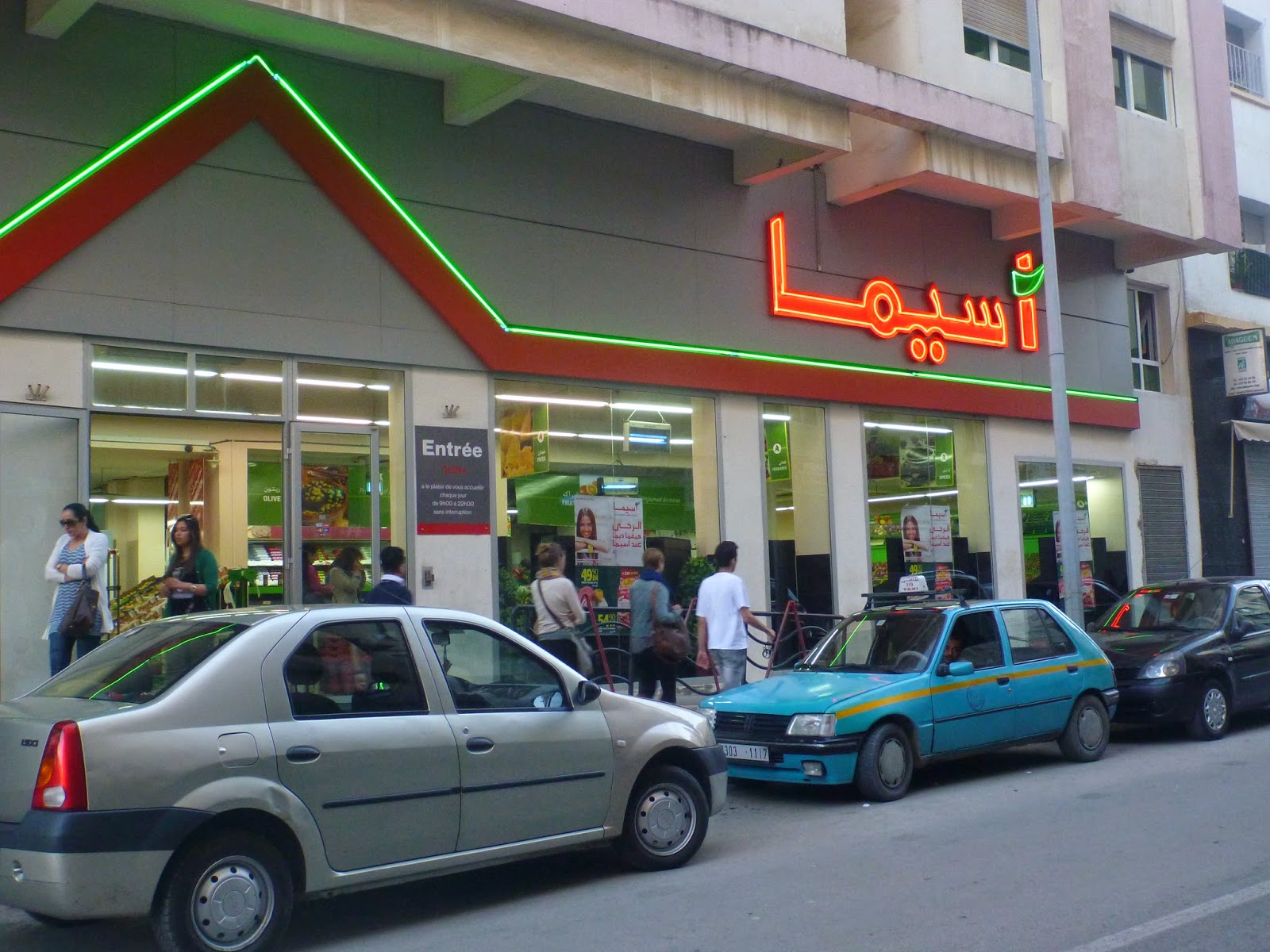
Super markets are quickly becoming the norm for food purchases in the developing world. In Tangier, western-style grocery stores stock a wide variety of fresh and processed foods, imported brands, and household and cleaning needs. Most have similar layouts to American chains, with sections for fresh produce, milk, meat and fish, bakery, deli, dry goods, and household supplies. The sizes vary: some independent neighborhood grocery stores are relatively small, some Wal-Mart style super markets located on the outskirts of the city are massive and offer consumer goods such as electronics and sports equipment in addition to groceries. Regardless of the size, all stores of this type are characterized by a formal price system, shopping carts and cashier lanes, and Western-style layouts with tile floors and bright lighting. However, many other types of shops and markets persist.


Alimentation General
Alimentation General translates to “general food store.” These shops, found in every neighborhood, are the go-to places for basic daily needs. They are relatively small and carry mostly dry and canned goods, some processed and snack foods, oil, milk, fresh bread, eggs, cheese, juice, usually some fresh fruits and vegetables. They also have things like laundry detergent, dish soap, and shampoo. They are usually less expensive than the supermarkets.


Central Covered Market
The large central market offers fresh fruit and vegetables, meat, fish, eggs, cheese, and olives. There are dozens of vendors within a large building, and each vendor usually offers a specific type of product: either fruit or vegetables, olives, chicken and eggs, or beef. Cheese is mostly sold by individual women with small informal stands within the market. Produce and meet are usually less expensive than the supermarket, but not always.


Street Vendors
In addition to the central market, fresh local fruit, vegetables, and cheese are also sold in less formal street stands, either on wheeled tables, blankets, or out of vans or trucks. These vendors are always less expensive than the supermarket and usually less expensive than the central covered market as well.


Fruit sec
Known as fruit sec, which means “dried fruit” in French, these small shops and stands sell  mostly processed snack foods, chips, candy, and cookies, as well as nuts and dried fruit. Most items cost less than a dollar, and for 10-25¢ you can buy a small scoop of nuts or sunflower seeds wrapped in a paper cone. You can find one on nearly every street, and on the busy main boulevard, most blocks have two or three.


Laiterie/Milbana/Cremerie
These types of shops, known as a laiteries or cremeries (literally milk store or creamery) in French and a milbanas in Moroccan Arabic, sell a variety of quick, inexpensive, on the go meals and snacks. The most common  offerings are sandwiches made with traditional Moroccan breads – hobz makalah, harcha, or erghraygef – filled with fresh cheese, butter, hard-boiled eggs, mortadella, olive oil, or nut butters. These types of sandwiches usually cost between 5 dirham (about 60¢) and 15 dirham. They also sometimes offer fresh juices and pastries, and some have processed snacks and bottled juices as well.

 
Sandwich Shops
Somewhat similar to the Laiteries, sandwich shops sell quick meals and snacks, mostly sandwiches made with eggs, chicken, liver, shrimp or beef, topped with vegetables and French fries. Prices ranges from 10 dirham (about $1.20) to 30 dirham.


 They are very popular and quite tasty.


Bakery/Patisserie
There are many bakeries in Tangier, offering fresh bread, cakes, cookies, and pastries. They are multiple types - the largest kind is a western-style store with at least a dozen varieties of fresh bread, both Moroccan styles and French styles like baguettes. They will also offer many kind of cookies and pastries. They vary in price but tend to be a little more expensive. 


A second type of bakery is the small street stand. These specialize in griddle-cooked Moroccan breads such as erghaygef and harcha, and usually offer honey, cheese, nut butters, and olive oil as accompaniments for a quick snack. Some offer soups or simple fish dishes as well, which can be eaten while standing there or wrapped up to go. 


A third type of patisserie specializes in the popular deep-fried treats that are popular here. They usually have some baked cookies as well, but the focus is the huge platters of golden-brown swirls of dough, fried and then soaked in a sugar-honey syrup.


Butchers

In some of the more residential areas, you can find stand-alone butcher shops not connected to a larger market. These tend to sell either beef or chicken, usually not both. Many also sell lamb or mutton. They often sell fresh vegetables too, making them easy stops for all the ingredients needed for home cooking.


Most of the meat arrives in large pieces – whole sides of beef are delivered to the shop and displayed, being cut and wrapped in paper as the customer purchases it rather than pre-cut and displayed in plastic wrap. Chickens are often sold whole, although you can easily find smaller pieces.


As pigs are haram - prohibited in Islam - it is almost impossible to find fresh pork, although you can find processed ham at import grocery stores.
 
Specialty vendors – in addition to stores selling many types of food, there are stands and shops that sell just specific items, such as dates or spices. These are mostly found in the market district of the old city.

 
In addition to these types of markets and snack shops, there are hundreds of simple cafés, serving little other than tea and coffee, upscale cafés with full menus, and a wide range of sit-down restaurants.

Wednesday, May 14, 2014

Current Events: EU Mango Ban

As of May 1, the European Union banned imports of Indian mangoes until December 2015. The ban comes after 200 shipments infested with fruit flies were discovered in Brussels in 2013, and extends to eggplants, two kinds of squash, and taro leaves. The EU claims that Indian exports are not sufficiently treated to reduce the risk of insect infestation; Indian officials say that a better examination and certification procedure has been put in place since the country was notified of the sanctions in March of this year. India, which produces forty percent of the world's mangoes, has threatened to take the case to the World Trade Organization.

The ban has wide-ranging impacts.

With a reduction in exports, Indian mango prices have dropped by fifteen to forty percent. This is good news for Indian mango consumers, who now have access to the higher-quality export product at lower prices. Especially prized are the Alphonso mangoes, now within reach for many middle-class consumers. Lower prices are not so good for farmers, who have already been hurt by unseasonal rain and hail leading to crop failure, or for the small-scale vendors now operating in a flooded marketplace.

However, the effects of the ban are limited because the EU is not the major destination for mango exports. In the 2012-2013 season, India produced 15 million metric tons, just 55,600 of which were exported. Of this fraction, less than ten percent went to EU countries. Most exports go to the Middle East, where there is a large Indian population. Over two seasons though, the ban could represent $10 million in losses for farmers, and will be particularly hard-hitting in the state of Maharashtra, which exports thirty percent of its crop to the EU. Some UK politicians are also concerned about the effect the ban will have on British importers and retailers of the fruit, which is especially popular there.

Other factors play into the low prices. Due to climactic changes affecting the fruit, farmers have been picking mangoes earlier and sending too many to the market. The global recession has also resulted in fewer shipments as corporate gifts, which make up a large percentage of business for some wholesalers.

Citing improved phytosanitary measures to control fruit flies, India has asked the EU to lift the ban; several British MP's have stated their support for a reversal of the restrictive measures.

Since the topic is mangoes, here is a recipe for delicious gazpacho, the perfect thing to cool down heated trade relations.


Mango Gazpacho with Mango Chutney (thanks to Ani at Whole Foods Market!)

  • 1 cup mango juice
  • 2 ripe mangos, peeled, pitted, and diced
  • 1 shallot
  • ½ cucumber peeled, seeded and diced
  • 1 cup blanched almonds
  • 2 tablespoons sherry vinegar
  • 10 fresh basil leaves
  • 6 mint leaves


Directions

1. The night before, place the almonds in a bowl and pour the juice over them. Allow to soak overnight.

2. The next day, place all ingredients in a blender and blend until it reaches desired consistency – less for chunky soup, longer for smoother.


If desired, serve with mango chutney: combine 8 oz. chopped dried mango, 1½ cups brewed black tea, ¼ cup raisins, 1 diced red onion, and ½ cup red wine vinegar in a saucepan. Simmer until the mixture is thick and the mangos have absorbed some of the liquid. The warm, sour chutney is a lovely contrast to the cool soup.


If you have extra chutney, use it in a grilled cheese with aged white cheddar and multi-grain bread!


Wednesday, April 16, 2014

Dairy in Morocco

On-farm milk production before processing represents 7.5% of the agricultural GDP in Morocco, worth about $850 million. Milk and other dairy products are produced on approximately 790,000 farms, providing year-round employment for 770,000 people. Just 5% of these are considered specialized dairy operations: the vast majority are smallholders that produce cattle for both milk and meat. For these farms, the sale of calves is very important economically. The sector has seen large changes since the 1950’s, and major manufacturers, as well as the Moroccan government, have invested in growing the dairy sector through product innovation, advertising, and marketing.

Dairy Consumption
Demand for milk is limited in large part due to low per capita income. Per capita dairy consumption is relatively low – 36 liters per year – and most consumption is in the form of plain milk, since yogurt and cheese are more expensive and seen as luxury products. Consumption varies from 90kg per capita in wealthy urban households to around 18kg in poor households. Future developments in milk consumption will be closely linked with economic development and wealth distribution in the country.

Types of Supply Chains
There are three kinds of dairy supply chains in Morocco. The largest is the Centrale Laitière Maroc, which controls about 50% of the market and is closely linked with French dairy giant Groupe Danone. Centrale Laitière produces a range of high-quality milks and milk products. It is the only manufacturer to distribute nationwide, and it benefits from its partnership with Danone for product development and innovation.

Pasteurized milk from the Centrale Laitière
The second type of supply chain operates through cooperative systems, with over 1000 collection centers throughout the country. Copag (Coopérative Agricole d’Agrumes), a competetive co-op based in Southern Morocco, controls approximately 20% of total volume of milk produced in the country and produces supermarket quality milk. It collects from 170 individual farms and 14,000 smallholders through collection centers.
The third chain is the informal processing and marketing of milk and milk products directly to consumers through peddlers and small workshops known as mahlabates. This system operates mostly in dairy basins around urban centers, and hygiene can be an issue. Milk is supposed to be pasteurized by law, but this is not always the case.

Traditional Moroccan cheese sold through informal chains


Effect of Government Policy on Milk Yields
Prior to the 1950’s, cattle herds were mostly local beef-oriented breeds, with low milk yields. During the period of colonization from 1912 to 1956, specialized dairy farms emerged, with greater reliance on European dairy breeds such as Pie Noire and Tarentaise. However, milk production did not increase substantially until the 1970’s, when the government initiated a plan to boost production. The dairy development plan included feed subsidies, expansion in forage land, irrigation projects, extension education, and importation of improved breeds like Holsteins, resulting in a doubling of milk production. These policies shaped the current dairy industry. For example, specialized dairy production concentrated in the newly irrigated regions, and now nearly 80% of cattle are improved breeds.
Structural adjustment policies in the 1980’s lead to the gradual phasing out of government involvement from the dairy industry and a greater role for private companies, cattle breeder associations, milk collection cooperatives, and autonomous veterinary and AI practices. Milk yields continued to increase: between 1970 and 2005, production increased from 400kg to 1200kg per cow.
            Today, milk production and collection and veterinary and insemination services are almost entirely private, while the government administers research, extension education, and food safety regulation. Unfortunately, educational extension services have suffered as the industry transitioned from state-run to privately controlled. The government also taxes milk imports to protect the domestic industry, and imports account for less than 20% of the market. Agriculture is tax-exempt in Morocco, which allows Copag, as a cooperative, to pay higher farm-gate prices to its farmers for their milk. Farmers benefit from a stable milk price which, given the low consumption, has potential for growth in the coming years.

Challenges
The Moroccan dairy industry faces a range of issues. One of the most important challenges is improving yield and quality of milk production. The government is decreasing the size of its role in the sector, meaning that the industrial sector, which already collects 60% of all raw milk, will have a key role in establishing and ensuring the fulfillment of quality standards. Not all collection cooperatives are well managed, leading to issues with efficiency and quality.
Milk yields can vary a lot with environmental conditions such as drought, making small farmers vulnerable to climate. While a significant amount of production occurs in irrigated areas, drought in rain-fed areas can reduce forage availability and require the use of more feed concentrates. This increases the price of production, and represents a high ‘virtual water’ cost. Adequate nutrition in general is also an issue, and leads to reduced yields and reproductive difficulties for imported breeds.
As mentioned above, the health and safety of milk products is not totally consistent. The Centrale Laitière produces high-quality, milk conforming to international standards, but it is impossible to fully regulate the informal supply chains, which often sell unpasteurized milk, cheese, and traditional fermented milk products. This poses a risk for bacterial infections, as well as potential heavy metal contamination. Most outbreaks of food-borne illness of other contamination issues come from the informal supply chain.

A yogurt drink traditionally served with couscous
 
Continued development of the dairy industry has the potential to benefit the country in many ways: higher per cow milk yields improves production efficiency and reduces environmental impact, an expanding sector creates important agricultural jobs and can boost household income, more industry involvement could raise milk quality and safety, and a greater domestic supply could provide more high-quality animal protein in marginal diets of poor Moroccans. In order to do this, both the government and private sector actors will need to invest in milk collection organization and infrastructure, extension education, and creation of domestic demand to support growth.

Sunday, April 13, 2014

Current Events - Immigration and the Agriculture Labor Force


Immigration is yet another example of the impact that all spheres of policy can have on the food system. The majority of farmworkers in California’s rich Central Valley are immigrants from Mexico and Central America, and many of them are illegal – approximately 2.5 million people live without papers in California alone. The irony is that while politicians debate immigration reform, stricter laws, and building walls, our country relies on underpaid immigrants to bring cheap fruits and vegetables to the table. The reality is that we need them, and farmers are increasingly calling for solutions such as agricultural visas that ensure a reliable, stable workforce. 

A combination of factors is making it harder for growers to find enough labor to harvest: an aging workforce of immigrants currently in the US, increased border security that has deterred new arrivals, and the constant fact that Americans do not want these jobs. Last year alone, the tightened supply led to wage increases of about $1 per hour. Unfortunately, this doesn’t really mean better wages and labor conditions for farm workers. Business-oriented lobbying groups report that this increase makes it harder for farmers to compete with foreign produce (see last post about NAFTA and Mexican produce!), resulting in a $1.4 billion loss as imports fill the gap between production and growing domestic demand.

Farmers and the congressmen who represent them show growing support for legislation that would offer a path to citizenship for undocumented immigrants. While Republicans as a whole tend not to be in favor of immigration reform, those representing the Central Valley are some of its strongest supporters. They, too, argue that the current system means losing business to foreign competitors, not giving away jobs Americans want. Creating a legal framework for immigration could simultaneously provide a steady supply of labor, support domestic production, and ensure better treatment of workers.

Wednesday, March 26, 2014

Moroccan Argan Oil


The story of argan oil, touted as a solution to both rural poverty and environmental degradation, illustrates the importance of coupling economic and social development with sustainable practices. In this case, “conservation through commercialization” supported economic gains for local people, but did not result in greater protection of the argan tree.

The Argan Tree
Argania spinosa is a hardy tree endemic to Morocco and little known outside of it. It is the second-most numerous tree species, and approximately 20 million argan trees grow over 7500 hectares in the semi-desert southwest of the country. With a life-span of 150 to 200 years, the argan tree can withstand extreme heat and drought thanks to deep root systems and other adaptations. It produces fruits slightly larger than walnuts, which contain one to three almond-like kernels inside a tough shell. The argan tree has deep cultural significance to the Berber people, who use the wood for fuel, leaves and pulp as food for goats, and the oil for cosmetic and culinary purposes. This unique tree plays an important socioeconomic role, providing livelihood for approximately 3 million people through the sale of nuts and oil.

Argan Oil
Argan oil is slightly darker in color than olive oil with a reddish tinge. It is used for both cooking and in cosmetic products including lotions, soaps, and sunscreen. The oil is high in vitamins A and E and essential fatty acids, and has been found to contain antimicrobial and antioxidant compounds. Research has demonstrated some cholesterol-lowering properties, and has linked consumption of argan oil with a reduced risk for some cancers, cardiovascular disease, and diabetes.


In the past two decades, the popularity of argan oil exploded due to favorable research findings about its culinary, health, and cosmetic properties. It has been showcased as an ingredient by top chefs and is gaining popularity as an ingredient in luxury cosmetics in the US and Europe. This demand lead to higher prices – it is currently one of the most expensive edible oils in the world – and increased production. 

Cooperative Oil Production and Benefits
The vast majority of argan oil is produced by cooperatives of women, by hand. Due to the hardness of the nut – sixteen times harder than a hazelnut – the production of oil is difficult. Attempts at mechanization have met with limited success, and while parts of the process can be mechanized, cracking the nuts with traditional hand methods is still the most effective. Once the hard shells are cracked, the kernels are roasted, crushed to a paste, and kneaded to bring the oil to the surface. The protein-rich residue is used as feed for goats, or mixed with honey to make amlou, a thick, peanut-butter like paste served with bread for breakfast.

Before the establishment of cooperatives in the 1990’s, oil producers had limited access to high-value markets due to poor infrastructure and indirect participation in the market for argan fruit. By combining traditional knowledge with increased production efficiency and market access, cooperatives have been very successful in expanding the market for argan oil and increasing the wages earned by producers. As of 2010, there were over fifty co-ops in southwestern Morocco producing argan oil for international and domestic markets.

Berber women are the primary producers of argan oil, and have benefited greatly from the success of the co-ops. In 2010 in the Essaouira region, women were earning about six Euros per day working through co-ops, ten times what they had earned producing it on their own. This brings them greater economic freedom, and households that had access to argan trees are more likely to send girls to secondary school. Larger organizations, including the Union des Cooperatives des Femmes de l’Arganeraie, link smaller co-ops together and aim to provide education and conservation training to the women involved.

Sustainability Issues
            The Moroccan government supports the development of the industry, and plans to triple production by 2020. However, with the increases in price and production have come more intensive harvesting practices that may not be sustainable. Researchers at UC Davis found that the while the argan oil boom benefited locals economically and increased the availability of education for girls, it sped up degradation of the forests. Argan nuts are being harvested more aggressively, sometimes reducing the crop of the following year. Households also tend to buy more goats with the earnings from increased sales, which can lead to tree damage when the goats overgraze. Many individual households have become more vigilant protectors of the fruit, but it has not spurred broader investment in the health of the argan forest.

This is a worrying trend. The argan tree has an important environmental function as a barrier to the encroachment of the Sahara desert. Its deep roots help anchor soil against wind and water erosion, and can even help supply water to nearby plants. It is also a foundation species for over 1,000 other plants and animals in the ecosystem. Because of its ecological importance, UNESCO declared the Argan forest an international biosphere reserve in 1998. Despite the recognition of its ecological role, numbers are dwindling – nearly one-third of the argan forest has been lost in the past 40 years.

The UC Davis researchers point out that conservation is not as simple as increasing demand for a traditional product. The success of commercialization in spurring conservation depends on how closely linked local benefits are with regeneration of the resource, on property rights and sovereignty within the communities, and on how households invest the economic gains. Argan oil has been touted as a win-win product, empowering women and alleviating rural poverty while encouraging protection of a valuable natural resource. The economic and gender equity gains are very real, unfortunately, the environmental benefits aren’t evident. It is essential that the government, NGO’s, and production cooperatives fully address the sustainability of argan oil production so this resource can continue to benefit people and the environment in the future. Unless this happens, the reduction in poverty and greater access to education will also be short-term gains of over-exploitation.

Read more about Argan oil here
Read the full UC Davis article here